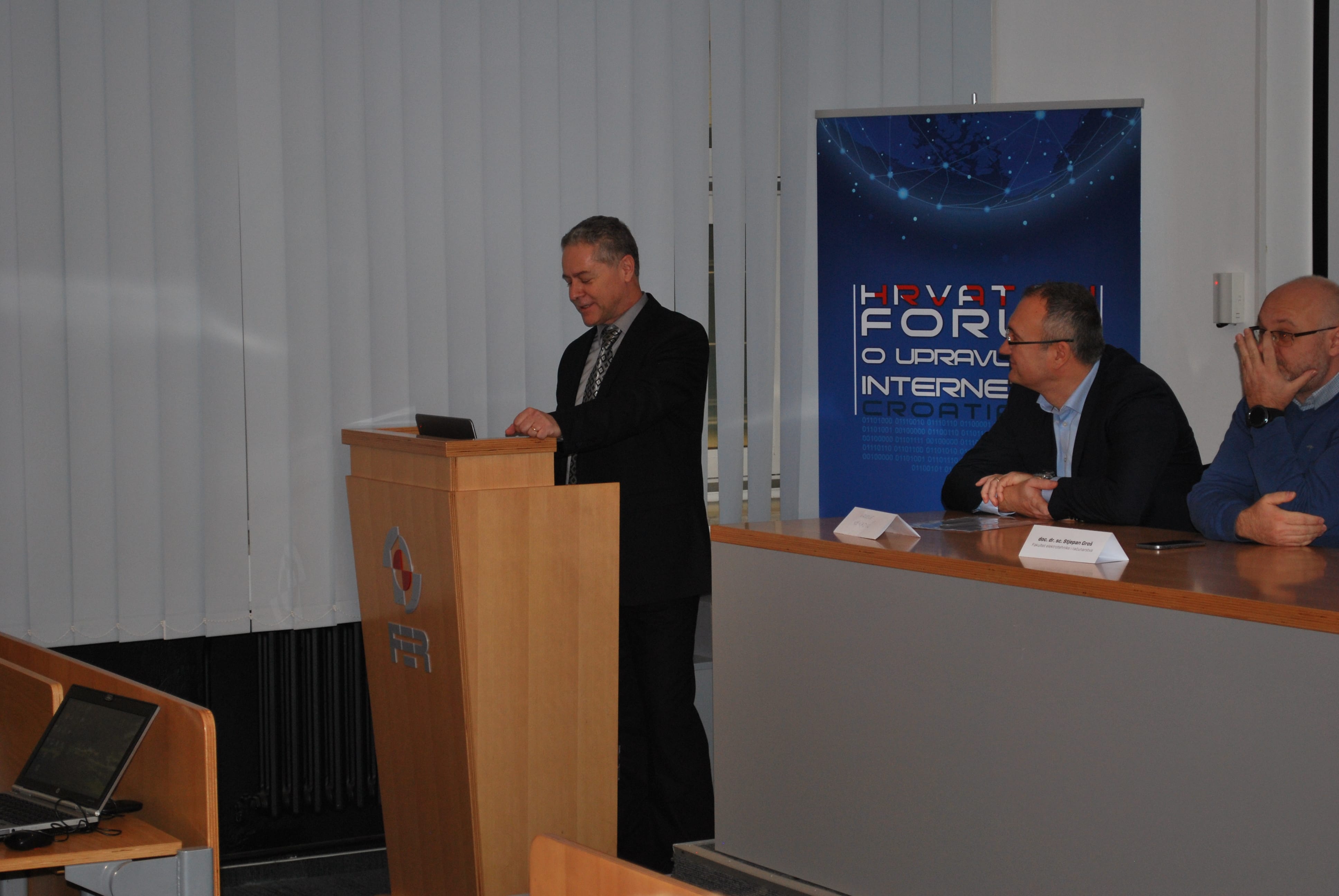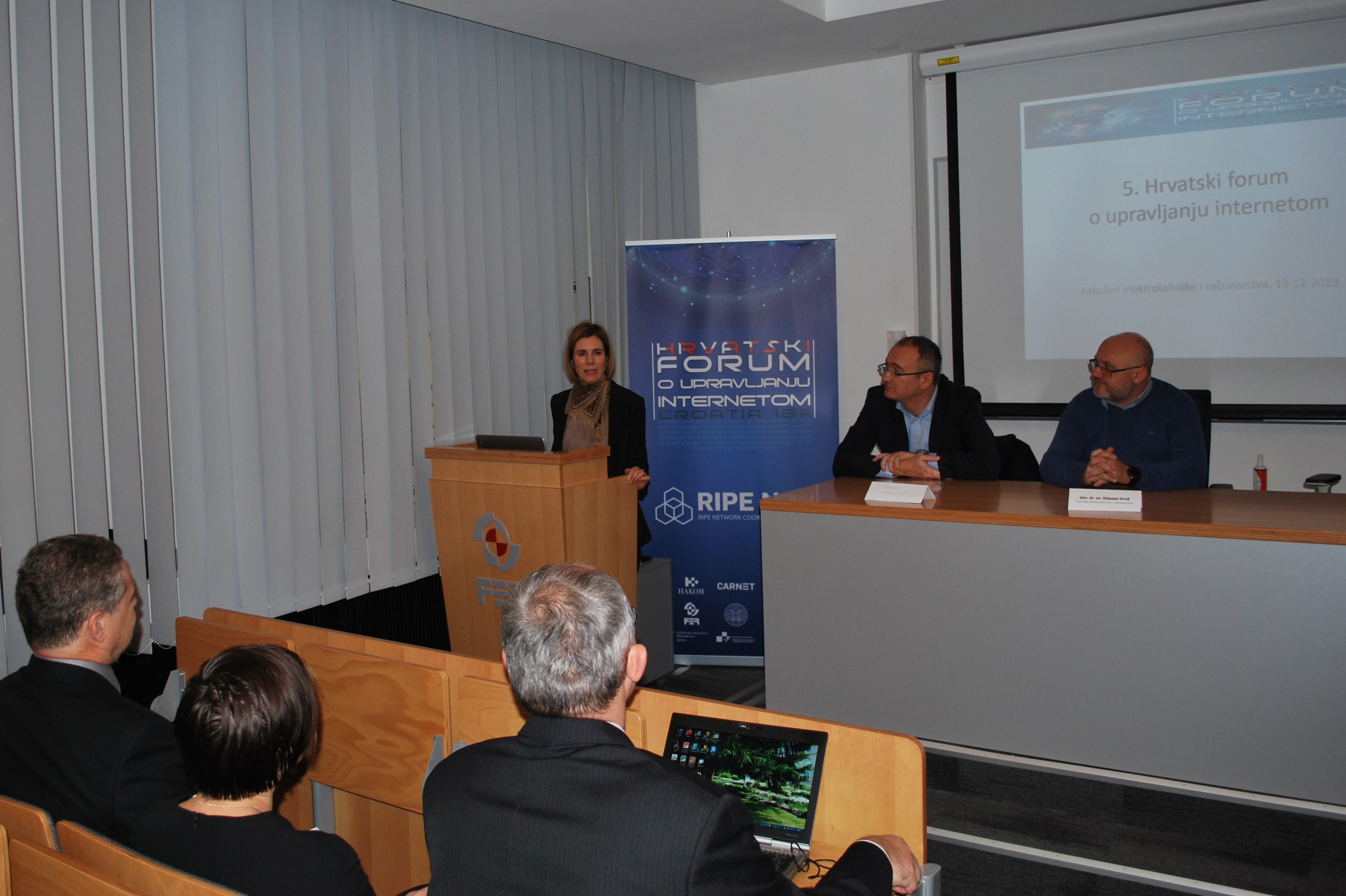
On Friday, December 13, 2019, the 5th Croatian Internet Governance Forum (CRO-IGF) was held at the Faculty of Electrical Engineering and Computing. The Internet Governance Forum (IGF) is a global initiative operating under the auspices of the UN with the idea of bringing together all interested parties to participate in discussions on issues important for the future of the Internet. This year's Forum was opened by Tonko Obuljen, President of the HAKOM Council, with a brief welcoming speech. Nataša Glavor from CARNET, the head of this year's CRO-IGF, touched on the global and local activities of the IGF.
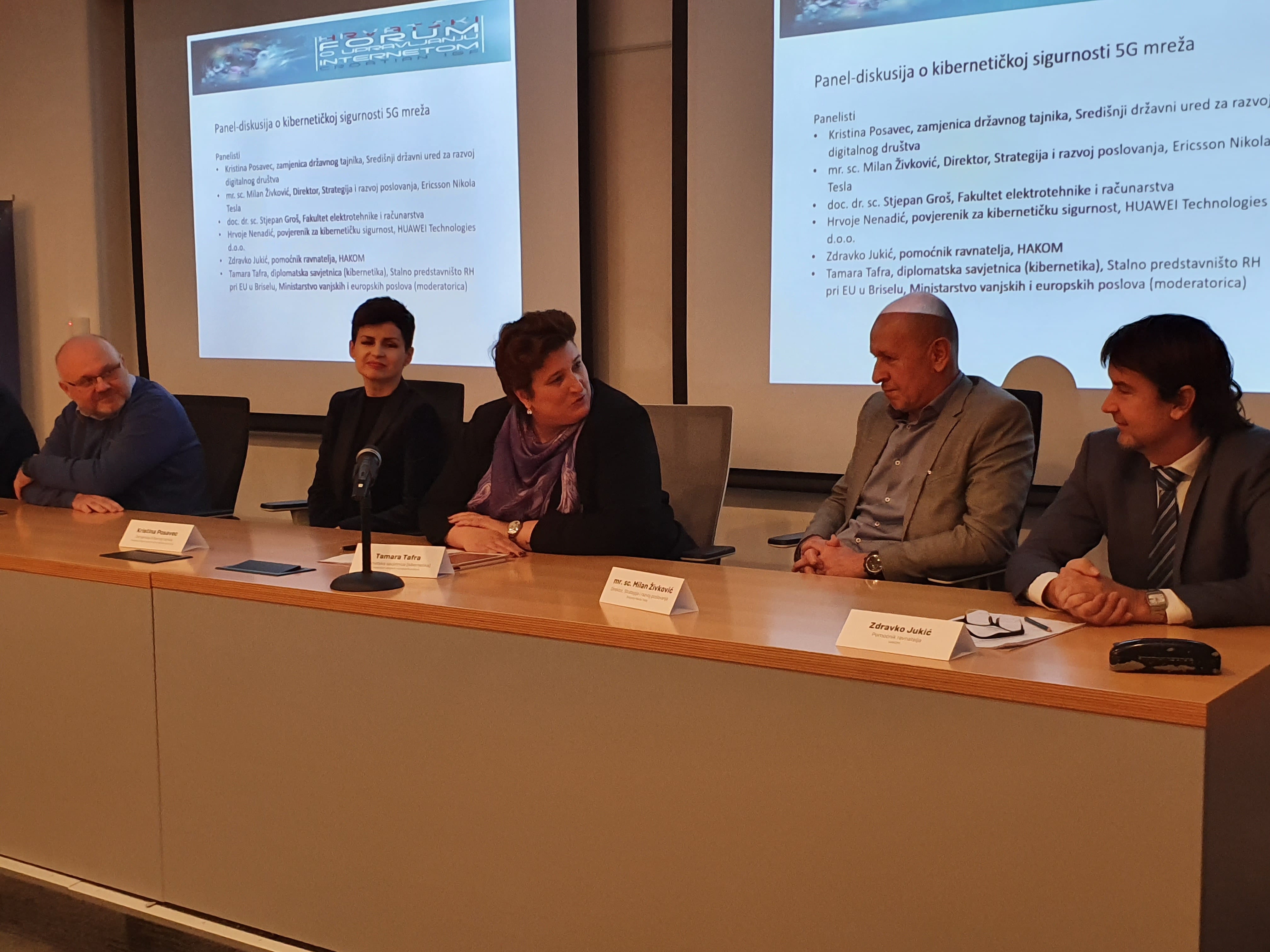
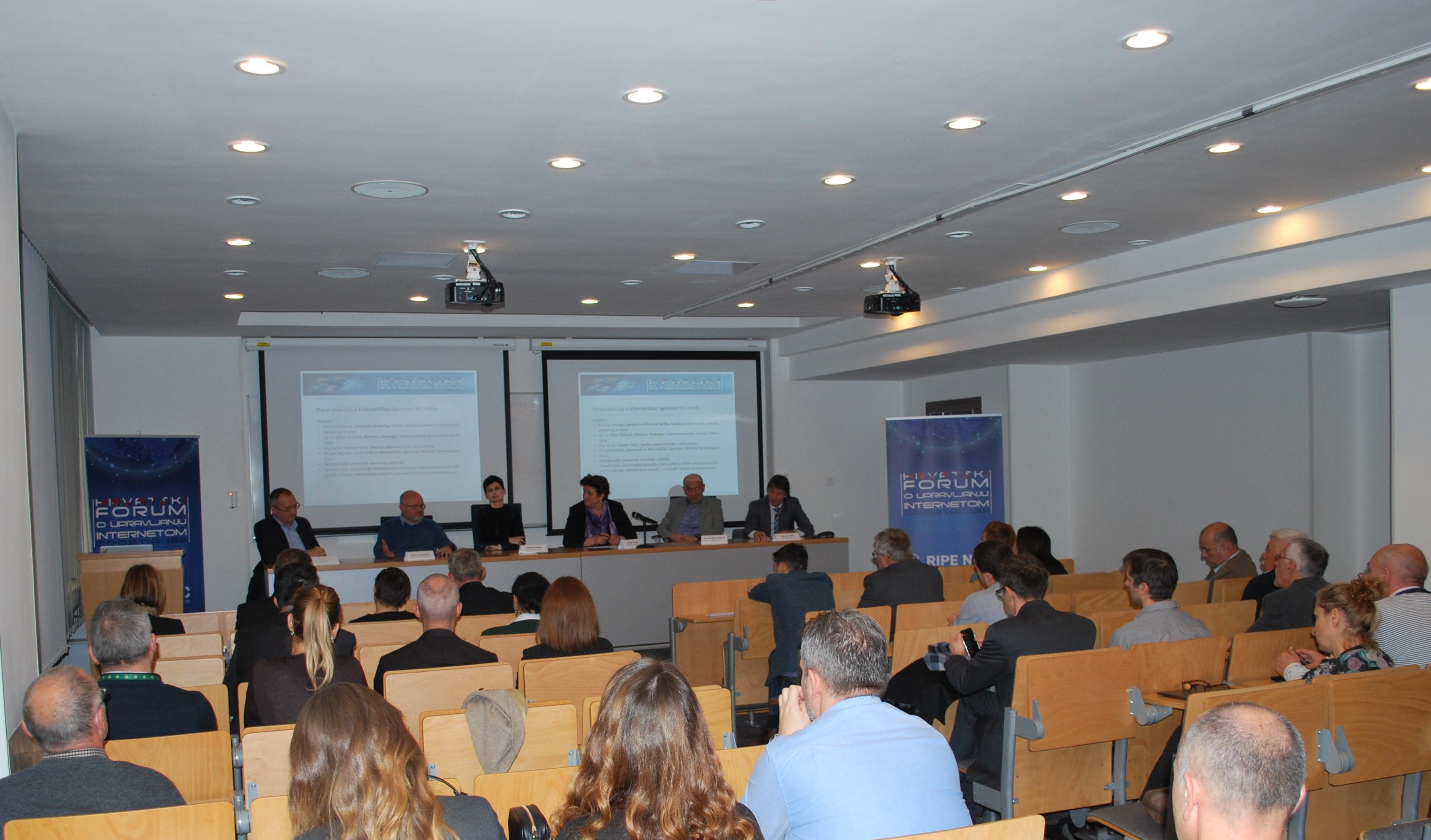
The focus of this year's Forum, through panel discussions, was on two very topical areas: the security of fifth-generation mobile networks (5G) and artificial intelligence. The panel on 5G cybersecurity included: Kristina Posavec, Deputy Secretary of State at the Central State Office for Digital Society Development; Milan Živković, Director of Strategy and Business Development at Ericsson Nikola Tesla; and Associate Professor Stjepan Groš, Ph.D., from the Faculty of Electrical Engineering and Computing at the University of Zagreb, Hrvoje Nenadić, Cybersecurity Commissioner for HUAWEI Technologies d.o.o., Zdravko Jukić, Assistant Director of HAKOM, and the discussion was moderated by Tamara Tafra from the Ministry of Foreign and European Affairs, Diplomatic Advisor for Cybersecurity at the Permanent Representation of the Republic of Croatia to the EU in Brussels.
The telecommunications network is the foundation for the application and development of other technologies, including the Internet of Things (IoT) and artificial intelligence. Therefore, it is of great importance to ensure the cybersecurity of this network. It is emphasized that the European Union pays great attention to identifying security risks. To this end, a set of tools is being developed.Toolboxwhich should soon be available in Croatia, and which would assess security risks. Certification of manufacturers of network infrastructure devices and components is also foreseen. There are still many unanswered questions and doubts, but all participants agreed that 100% security will never be achievable. The key elements will be good faith, both from manufacturers of equipment and devices, and from service providers, and their mutual trust. The greatest role in achieving security lies with the state and regulators, while the individual, as a user, has very little influence on all of this.
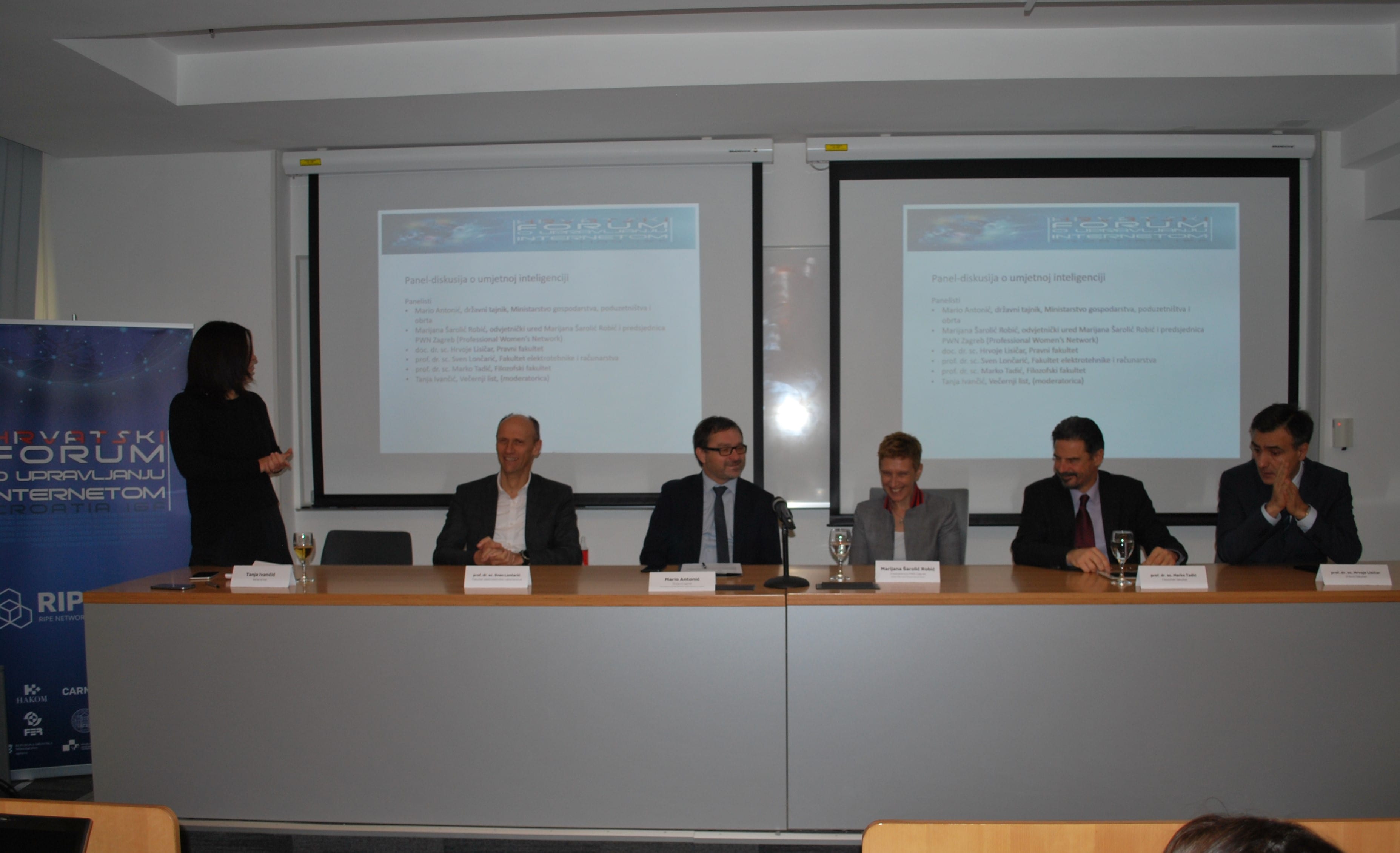
The participants of the second panel on artificial intelligence were Mario Antonić, State Secretary of the Ministry of Economy, Entrepreneurship and Crafts, Marijana Šarolić Robić, lawyer and president of PWN Zagreb, Asst. Prof. Hrvoje Lisičar, PhD, from the Faculty of Law of the University of Zagreb, Prof. Sven Lončarić, PhD, from the Faculty of Electrical Engineering and Computing of the University of Zagreb, Prof. Marko Tadić, PhD, from the Faculty of Philosophy of the University of Zagreb, and Tanja Ivančić from Večernji list as the discussion moderator.
The panel discussion was very interesting and featured quite a few different perspectives. Artificial intelligence was discussed from technological, ethical, legal, and linguistic viewpoints. The concept of artificial intelligence, and everything it encompasses, is not yet fully clarified. It was emphasized that a relatively small number of people understand artificial intelligence and its presence in society, and the need for education is great. Artificial intelligence and machine learning are not the same as human learning and thinking. Artificial intelligence is still at a low level and is currently applied in a smaller scope where it replaces humans, and humans are (still) the ones making the final decisions. From a technical standpoint, more attention is paid to ethics and ethicality, but legal regulation is neglected. The agenda related to artificial intelligence globally is dictated by the industry, for which profit is the priority. There is also the issue of the communication interface, or rather, human-machine/robot “conversation.” Communication in natural language is innate to humans, and a problem of mutual understanding arises. Only a part of natural language can be covered by the algorithms that artificial intelligence uses. This opens up numerous questions and the problem of translating different languages and communicating with each other through artificial intelligence. New natural language technology is being developed to address this. Croatian is the 24th official and equal language in the European Union, and it is also included in this issue. In Croatia, the government is working on a strategic national plan/program until 2030, which includes the issue of artificial intelligence. This will be followed by an operational program and a financial plan.
A detailed report from this year's Forum will be available and published on CARNET's website all other reports from previous Forums.