

Schools 2.0
With the School 2.0 project, CARNET aimed to connect as many schools as possible to high-speed internet and, with the help of technology, provide higher quality education and better connectivity between schools. In this way, 27 schools have enabled collaboration through technology among themselves, as well as with the whole world.
Based on the Decision of the Government of the Republic of Croatia of September 1, 2011 (Class: 650-05/11-03/01, File Number: 5030104-11-2 on the method of allocating funds and the criteria and measures for stimulating the development of broadband infrastructure in areas where there is insufficient interest in the development and investment in broadband internet access infrastructure), the Government of the Republic of Croatia allocated the amount of HRK 11,986,616.00 to CARNET for the purpose of maintaining and repairing equipment on islands, and for the procurement and maintenance of new equipment for existing and new projects on islands and other geographically remote areas (e-Islands Project), all in order to ensure the dedicated use of the entire amount for the intended purposes even after the current budget year has expired.
CARNET implemented the recognized and awarded e-Islands project, which enabled participants in the educational process in elementary schools on islands to receive a higher quality education and access all necessary information in modern education. Based on the aforementioned Government decision, CARNET, drawing on its experience from the e-Islands project, has facilitated both the development of broadband infrastructure itself in rural and underserved areas throughout Croatia, and improved educational conditions in these areas by utilizing the latest information and communication technology in education, through the use of educational-technological models (ETMs) tailored to the specific needs of each school.
The project duration was defined by a decision of the Government of the Republic of Croatia. The project began on January 1, 2012, and ended on December 31, 2013. Schools were included in phases, in accordance with clearly defined criteria. The level of school involvement depended on the educational-technological model (ETM) they fit into.
The goal of CARNET, the project implementer, was to enable the widest possible inclusion of schools in the project, in order to facilitate high-quality and comprehensive distance learning and e-education for as many users as possible – teachers and students. Therefore, a detailed analysis of the situation and needs in the field was carried out, as well as feedback and examples of good practice from the previous e-Otoci project.
Project Goals
The general objectives of the project are defined by the decision of the Government of the Republic of Croatia:
- development of broadband infrastructure in rural and underserved areas where there is no interest in infrastructure development and investment
- increasing the number of schools connected to broadband internet access
- increase in broadband internet users
- Increase in the number of settlements with guaranteed broadband internet access.
Specific goals related to establishing broadband internet access infrastructure are:
- promote territorial and socio-economic cohesion
- Equal access to broadband internet for all citizens of the Republic of Croatia
- equal educational opportunities
- Added value in tourism through wireless electronic communication infrastructure
- community involvement.
The educational objectives are defined by both the decision of the Government of the Republic of Croatia and in accordance with the national education strategy and the Croatian National Educational Standard (HNOS):
- Improving the quality of education in schools in rural and underserved areas
- Provide isolated schools with a shortage of professional staff and/or equipment with the ability to deliver education to children in line with national standards using appropriate information and communication technologies and tools.
- Teacher education for teaching using information and communication technology and innovative tools and methods
- involving participants of the educational process in e-communities.
Vision
The project vision was based on the goals defined in the Decision of the Government of the Republic of Croatia on territorial and socio-economic cohesion, equal conditions for broadband internet access for all citizens, and equal educational opportunities, and it read:
- short-term – connecting a certain number of schools in rural and disadvantaged areas of the Republic of Croatia via broadband internet and using educational technology models that will enable schools, especially teachers and students, to have equal educational opportunities, for the purpose of staying in their place of birth and its development
- Long-term – linking all schools and other suitable institutions in rural and disadvantaged areas of the Republic of Croatia, and connecting them with all other schools and appropriate institutions throughout the territory of the Republic of Croatia, in order to create a comprehensive network of schools as places of continuous cooperation, information flow, and joint work on education, through which equal educational conditions will be ensured for all students regardless of their place of residence and the school they attend, as a prerequisite for the economic and social recovery of rural and disadvantaged areas and their integration into the overall social and economic life of the Republic of Croatia.
School locations
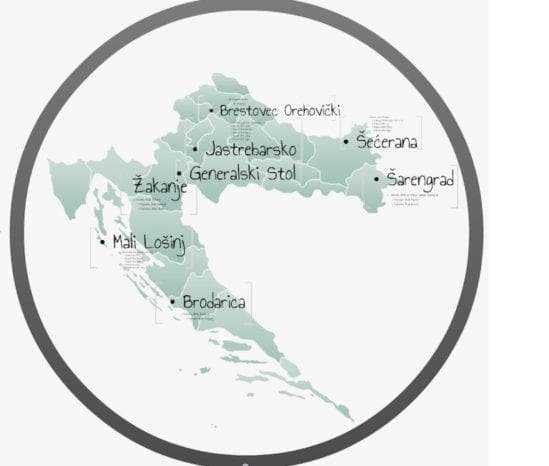
The following schools were included in the project during 2012:
Dr. Franjo Tuđman Elementary School, Šarengrad
- PŠ Mohovo
- PŠ Bapska
Šećerana Elementary School, Beli Manastir
- PŠ Baranjsko Petrovo Selo
- PŠ Luč
- PŠ Torjanci
Elementary School Generalski Stol
Žakanje Primary School
- PŠ Kamanje
- PŠ Ribnik
Brodarica Elementary School
- PŠ Krapanj
Marija Martinolić Elementary School, Mali Lošinj
- PŠ Unije
- PŠ Susak
- PŠ Ilovik
- PŠ Nerezine
- PŠ Veli Lošinj
LJubo Babić Elementary School, Jastrebarsko
- PŠ Desinec
- PŠ Petrovina
- PŠ Plešivica
- PŠ Volavlje
- PŠ Čeglje
Stjepan Radić Elementary School, Brestovec Orehovički
- OŠ Orehovica
European Award for Innovation in Public Administration
European Prize for Innovation in Public Administration
The Project School 2.0 has been selected as one of the three most innovative initiatives within the “European Public Sector Innovation Award,” in the Education and Research Initiatives category. The project aims to enable high-quality and comprehensive distance learning and e-education for the widest possible range of users – teachers and students.
The awards ceremony was held on Thursday, June 6, 2013, during the conference “Week of Innovative Regions Europe Conference”in Cork, Ireland, and the project was awarded €100,000 for further development of the School 2.0 project. 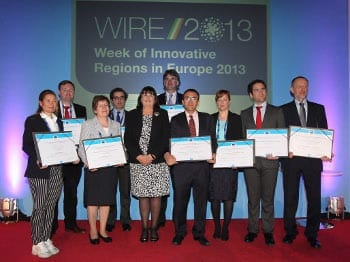
The valuable award was presented by Máire Geoghegan-Quinn, the European Commissioner for Research, Innovation and Science, who said on the occasion: “Innovation is not just for business. Public administration generates half of the EU's gross domestic product and it too must embrace change. Today's winners have shown that by combining new ideas and technology, we can improve people's lives and contribute to the modernization of our economies. We need more such initiatives.”
The competition was launched by the European Commission, and rewards those who have improved public administration through innovation and encourage others towards a more modern and innovative approach to work. The European Public Innovation Award recognized nine of the most innovative initiatives, three in each category, launched by European public administration bodies. Winners were selected based on four criteria: originality of the initiative and the possibility of wider use of the same model; economic impact of the initiative on society; relevance of the initiative in relation to the problems society currently faces; and planned use of allocated funds. More information about the competition and the winners can be read on the website. European Commission.
In accordance with the tender provisions, the award should ensure the further development of the School 2.0 project. This means continuing professional development for teachers involved in the project to improve digital competence, investing in the development of digital maturity of the participating schools, and working on project-based networking of schools at national and international levels.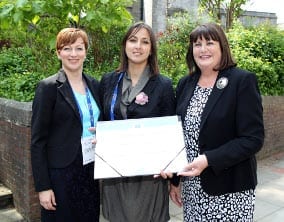
Within this project, eight main schools with their respective regional schools (a total of 27 locations) have been connected to high-speed internet via fiber optic cable. Wireless networks (with eduroam access points) have been set up within the schools themselves, allowing students and teachers to access [content/resources] via tablet computers. online content, digital textbooks, use them for video conferencing, and for distance learning. All these schools are also included in the e-Diary project.
For the project, CARNET received just under 12 million kuna through a tender by the Croatian Agency for Postal and Electronic Communications – HAKOM. These funds were used not only for the aforementioned network and videoconferencing infrastructure and connections but also for the procurement of tablets for teachers and students, as well as the necessary training for teaching staff to improve teachers' digital competencies and targeted training for technology use, and for the design and implementation of project collaboration among schools.
The project envisages that all schools involved in the project will collaborate with each other through various educational activities that include the use of technology in teaching.