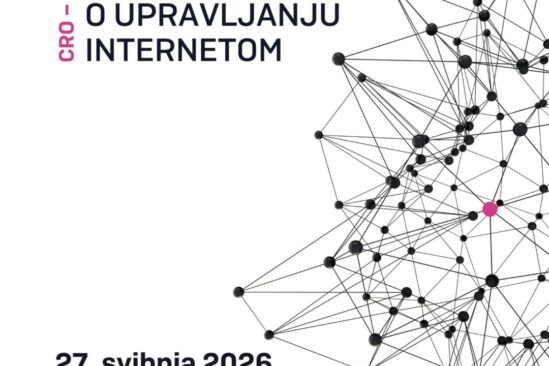
CRO-IGF 2026
U svijetu u kojem digitalne tehnologije oblikuju svaki aspekt naših života, pitanje upravljanja internetom je ključno za očuvanje transparentnosti, sigurnosti i prava svih osoba. Deveto izdanje ovogodišnjeg CRO IGF-a fokusirat će se na sljedeće tematske cjeline
Svemir bez granica, ali ne bez pravila
Svemirski sektor je postao dinamično tržište i strateški interes svake države. Propisi često ne prate brzinu tehnološkog razvoja. Svemir je otvoren za poslovanje, ali znate li koja su pravila igre? Razgovarat ćemo o preprekama i odgovornostima. Stručnjaci će izlagati svoja stajališta o ravnoteži između ekonomskog rasta industrije i očuvanja sigurnosti u orbiti. Otkrijte kakva nas budućnost čeka među zvijezdama.
Akt o digitalnim mrežama: Ključne promjene i implikacije za tržište (Digital Network Act – DNA)
DNA predstavlja nastojanje Europske unije za ubrzanjem razvoja naprednih digitalnih mreža, jačanjem jedinstvenog tržišta i povećanjem otpornosti infrastrukture u sve zahtjevnijem tehnološkom i geopolitičkom okruženju. DNA ima za cilj pripremiti Europsku uniju za buduće pouzdane i otporne digitalne mreže. Saznajte ključne informacije o primjeni i značaju DNA-a.
Internet Governance Forum
The Internet Governance Forum (IGF) is a global initiative operating under the auspices of the UN, with the idea of bringing together all stakeholders in one place to participate equally in discussions on issues important to Internet governance. The initiative was established in 2006 at World Summit on the Information Society (WSIS) in Tunisia, by decision of the UN Secretary-General as an open platform for discussions related to internet governance issues.
The immediate motivation for this decision was the need to include a broader social community in the discussions about internet governance and regulation, given that it was realized that the topics related to internet governance are wider than just IP address space, internet protocols, and domains. The need to include other stakeholders in the discussions, in addition to state representatives, such as representatives of civil society, academia, industry, and the private sector, was also observed.
The IGF does not have a decision-making mandate, nor does it pass binding acts, but its results can influence processes that have binding effects. With its conclusions and by drawing attention to topics it considers important, the IGF can influence decision-makers and thus participate in the formation of official positions or public policy.
The IGF is completely open to participation by anyone interested in issues of internet sustainability, stability, security, use, and development, and topics for discussion can be proposed by anyone interested.
IGF is an important component of the multi-stakeholder model of internet governance, which is recognized by important actors in global development, such as the World Economic Forum in Davos, where the head of MAG (Multistakeholder Advisory Group), the working group that coordinates the IGF's work presented the main conclusions of this year's IGF.
Besides the global IGF initiative, there are also regional ones (e.g. EuroDIG – European Dialogue on Internet Governance, SEEDING – South East European Dialogue on Internet Governance), national (e.g. CRO-IGF), age (Youth IGF).
More information is available on the website. Internet Governance Forum.
IGF initiatives, especially national and regional ones, are important because they promote communication in their environments involving all stakeholders, encourage the development of a culture of dialogue among various stakeholders on internet-related issues, which helps to form a proposal or opinion that includes diverse perspectives and interests.
The important principles on which IGF is based are:
- openness and transparency (enabling all stakeholders to participate in the IGF, public insight into all parts of the IGF's work)
- inclusivity (allow everyone interested to participate equally)
- bottom-up Access (Public participation in the creation of the IGF program)
- not intended for the sale of goods and services
- multistakeholder model (model including all stakeholders: academia, the entrepreneurial sector and industry, civil society organizations, and state and public administration).
Croatian Forum on Internet Governance - CRO-IGF
In addition to the global IGF, which brings together participants from around the world, a number of regional and national IGF initiatives have been established due to the need to consider specific issues in light of national, regional, cultural, and other specificities and interests. For an initiative to be recognized by the global IGF in Geneva, it must meet the criterion of openness and the possibility of inclusion of all interested stakeholders.
The Croatian National IGF was established in 2015 and is recognized by the global IGF. Croatia is among the first countries in the broader region (e.g., Austria 2015, Slovenia 2016) to successfully establish a national IGF, thus clearly positioning itself alongside countries advocating for the aforementioned multistakeholder model of internet governance. In addition to the political message, the national IGF gives us the opportunity to openly engage in discussions or shed light on less known topics relevant to our country concerning the field of internet governance.
- to point out to various stakeholders the opportunities for involvement in internet governance processes that are important for their business and activities, and to encourage discussions and, if necessary, assist in better understanding internet-related topics;
- empower and engage all stakeholders in Croatia to actively participate in national, and therefore directly or indirectly, regional and international internet governance processes;
- Identify internet governance topics that are important to Croatia.
All individuals and organizations, members of the academic community, industry and the entrepreneurial sector, civil society and government administrations interested in the future of the internet participate as equals in the forum.
Organizing Committee of the Croatian Internet Governance Forum
|
Civil Society/Users: Kristijan Zimmer, HR Open Ivan Ćaleta, Center for a Safer Internet/Center for Missing and Exploited Children |
The academic community Marin Vuković, FER Tihomir Katulić, Faculty of Law Zagreb |
|
Public authority Krešo Antonović, MPPI Marin Ante Pivčević, MPUIDT Tihomir Lulić, Ministry of Foreign and European Affairs Ivana Jelačić, CARNet Mislav Hebel, Zdravko Jukić, HAKOM |
Private sector/Technical community: Morana Čulo Jovičić (Telemach) Hrvoje Hadžić, ENT Branimir Rajtar, Ivana Golub, NOG.hr Nataša Glavor, SPAN Inc. |