

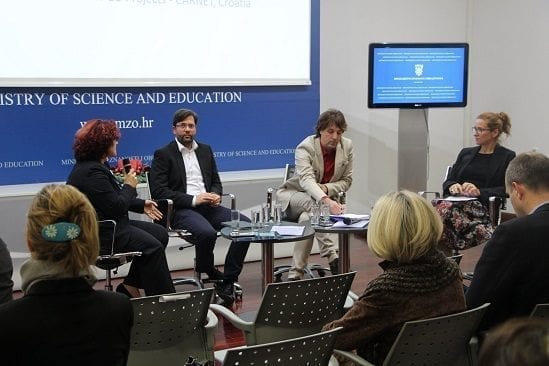
CARNET and the Ministry of Science and Education held a Strategic Forum on Digital Maturity of Schools called “Digital Maturity of Schools”. Aside from Assistant Minister Lidija Kralj, the Forum was attended by Ádám Horváth from the Hungarian Centre for Digital Pedagogy and Methodology and Borut Čampelj from the Slovenian Ministry of Education, Science and Sports.
The Forum's objective was to initiate a discussion on strategic areas and priorities for integrating technology into the Republic of Croatia's school system, as identified during the drafting of the Strategy for Digital Maturity of Schools. Assistant Minister Lidija Kralj opened the Forum, presenting the Strategy, which defines and categorizes areas, priorities, and goals for the digital transformation of schools and the school system by 2030. Concurrently, it aims to foster the development of students into responsible, globally competent, and innovative citizens.
The Assistant Minister of Science and Education, Lidija Kralj, pointed out the necessity of the meaningful and efficient use of technology to achieve learning outcomes. „We need new methods, which are lacking today in the teacher training process,” she concluded.
Some of the discussed topics were adequate network connectivity, equipment and technical support in teaching with the use of ICT, financing innovations and projects by teachers and students, and emphasizing domestic and international collaboration among schools.
„Research shows that there is no link between the equipment you have and its intended use. It is equally important to invest as much in human resources and potential as in technology,“ said Borut Čampelj from the Slovenian Ministry of Education, Science and Sport, adding that an innovative learning environment should combine these three areas: didactics or new pedagogy, flexible organization, and efficient and meaningful use of ICT.
„Teaching is no longer just providing information. The emphasis should be on pedagogy, not technology. Instead of equipment, more emphasis should be on services for providing accessibility to digital content. The state cannot provide a computer for each student. BYOD is the only sustainable system,” said Adam Horwath, sharing his experience from Hungary, where 300 institutions participated in the decision-making process for the digital development strategy. „Digital pedagogy prepares children for life in the digital age. The school system should prepare students for the modern labor market – teaching them teamwork, problem-solving skills, and working with digital tools is just a portion of a comprehensive education strategy,“ said Horwath.
The process of adopting the Startegy of digital maturity of schools and the school system is based on scientific and expert evaluation, and the initial report of the scientific research on the effects of the CARNET e-Schools project. It references the Framework for Digital Maturity and the External Assessment of Digital Maturity of Schools in the Republic of Croatia.