

“The future is digital, but it's still necessary to develop other skills. Which ones? The skills of the future. The skills that are the hardest to find in the job market. These are the skills that machines cannot perform: problem-solving, creativity and innovation, adaptability, leadership, emotional intelligence.”
These words were taken from Dr. Robert Kopal's talk titled „Creativity 4.0: Creativity in Spite of and Thanks to the 4th Industrial Revolution,“ which was one of the highlights from the 2nd CARNET Users Conference CUC20: Network of Ideas, held in Šibenik.
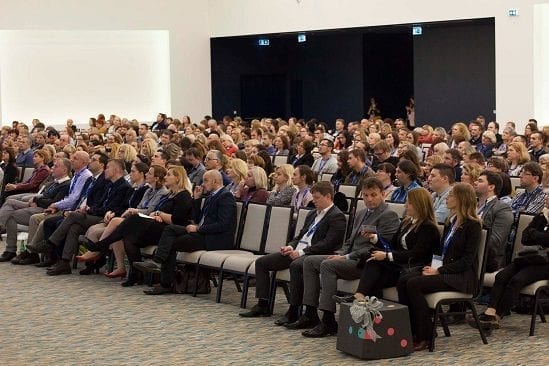
The largest conference in the field of ICT application in education in the Republic of Croatia was attended by 1074 participants, including primary and secondary school teachers, CARNET system engineers and coordinators, members of the scientific and research community, and IT experts and entrepreneurs.
The conference's main topics were covered, and questions were answered in over 100 presentations and 63 workshops. The importance of media, digital, and scientific literacy was emphasized, as well as the use of digital skills and critical thinking, the application of artificial intelligence and neuroscience, and the efficient use of technology in education.
Dr. Michelle Zimmerman, a professor at Renton Preparatory Christian School, one of the top 3 STEM schools in the USA, held a workshop titled „Leading Education Transformation“ for school principals about changes in the education system and new learning methods.
“Leading the change in education is exciting and challenging. However, with so many technological possibilities, sometimes it’s hard to even get started,” feels Dr. Zimmerman, whose lecture „People First: Technology that Supports Humanity“ was the closing one of CUC 2018.
Dr. Kristijan Lenac gave a talk entitled “What is blockchain and why is it important?”. “Blockchain is a new technology being massively applied in different sectors of society. It's being heralded as the next generation of the internet, providing direct value transfer among stakeholders with far-reaching effects on the economy and society,“ says Dr. Lenac about the role of blockchain, which is mostly associated with Bitcoin and other cryptocurrencies.
One of the most important subjects in Croatia today is financing through EU funds. The lack of information on how to develop an idea into a project that is acceptable for EU funding is most commonly the barrier to withdrawing funds. In the workshop titled „How to spend 10,160,430,000.00 HRK,“ everyone who was interested could learn how to create a successful EU project from examples.
This year, the conference has introduced two new formats, Teachmeet and Speeddate, to inspire participants to share their knowledge and experience. These formats will also provide easier ways to find collaboration partners for both teaching activities and research when applying for EU project funding.
As part of the conference, there was a competition called "Record, Write, and Win!" aimed at all primary and secondary schools with the goal of encouraging schools to creatively use ICT in teaching. Šarengrad Primary School, dr. Franjo Tuđman, won in the primary school category, and Geodetic School in Zagreb won the prize in the secondary school category.
The Conference Programme Board announced that the best lecture was „Mediated transfer in teaching programming“ by Divna Krpan from the Faculty of Science Split and Damir Brčić from the Split-Dalmatia County.
There was also discussion about personal data protection, intellectual property, entrepreneurship, and the informatization of business operations in educational institutions, as well as security and other challenges in the digital society.